
The Page That Got Flipped: How Manga Fought to Keep Its Original Direction
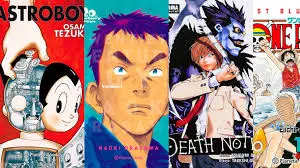
When Akira, Katsuhiro Otomo’s sprawling, dystopian masterpiece, arrived in American bookstores in 1988, it came mirror-reversed. Every page had been flipped horizontally, every panel reordered, every speech bubble rearranged, so that Western readers could follow it from left to right, front to back, the way they had always read. The motorcycle gangs of Neo-Tokyo charged in the opposite direction from the original. Characters were left-handed where Otomo had drawn them right-handed. Some sound effects were awkwardly redrawn in English. The story was the same. The book was not.
This was the standard practice at the time, and for a while almost no one in the Western publishing industry questioned it. Manga, in this view, was content to be extracted from its original form and repackaged for a foreign market. The artwork was a vehicle for the story, and if the vehicle needed to be rebuilt for a different road, so be it. It would take more than a decade, a vocal fan community, and a handful of outspoken creators to change that assumption. And when it changed, it changed the entire shape of how manga is read outside Japan.
What Flipping Actually Did
To understand why the debate over page orientation mattered so much, it helps to understand what manga artists actually lose when their work is flipped.
Japanese is traditionally written from right to left, and manga follows that convention. A reader opens the book from what a Western reader would call the back, works through pages from right to left, and reads panels within each page in the same direction. This is not simply a neutral formal convention. It is built into the visual grammar of every page. A character moving from right to left in the original is moving in the reading direction, which carries a different psychological weight than the same character moving against it. An impact scene designed to hit the reader at the end of a right-to-left page sequence lands differently when that sequence is reversed. Panel transitions, eye movement, and pacing are all calibrated to a specific directional flow.
Flipping a page also creates physical anomalies that, once noticed, cannot be unseen. Characters who were right-handed become left-handed. Parting in a character’s hair switches sides. Text on signs, storefronts, or clothing that has been imperfectly translated may appear garbled or backwards. In action sequences, where the direction of movement is often part of the dramatic meaning, a flipped panel can feel subtly wrong even to readers who cannot articulate exactly why.
None of this mattered much in the early years of Western manga publishing, because the readership did not yet have the tools or the context to notice. Manga was new to Western markets, readers had no access to Japanese originals, and the flipped editions were simply what manga looked like. But as the fan community grew more sophisticated through the 1990s, as imports became more accessible and fanzines and later internet forums spread detailed discussions of the original Japanese editions, the distortions introduced by flipping became increasingly visible and increasingly contested.
Creators Push Back
The earliest and most prominent voice against flipping came from Akira Toriyama, creator of Dragon Ball, one of the most widely read manga series in the world. Toriyama objected to having his work mirror-reversed for foreign publication, and his objection carried weight precisely because of the commercial scale involved. A creator of Dragon Ball‘s significance was not easy to ignore.
Toriyama was not alone. As Western publishers sought licenses for more prestigious titles through the 1990s and into the early 2000s, they increasingly encountered creators who had opinions about how their work should be presented, and many of those opinions were against flipping. The issue was, at its core, one of artistic integrity. These were not just commercial products to be optimized for a target market; they were works of visual art in which page direction was part of the design, not incidental to it.
The fan community reinforced this pressure from below. By the late 1990s, Western manga readers who had engaged seriously with the form were vocally in favor of preserving the right-to-left format. Online discussions framed flipping not just as a practical inconvenience but as a form of disrespect, a refusal to ask readers to adapt to the work, in favor of adapting the work to readers. This argument had a parallel in the world of subtitling versus dubbing: a significant portion of the audience for foreign film and television actively preferred subtitles because they wanted the original language, the original performances, the original sound. Reading manga right-to-left, in this framing, was not a burden but an act of engagement with the source material.
Tokyopop and the Format Shift
The decisive commercial break came with Tokyopop, a Los Angeles-based publisher founded in 1997 that made right-to-left formatting a central part of its brand identity. Where other publishers had either flipped their titles or offered right-to-left as a quiet option, Tokyopop built its entire aesthetic around the unflipped format, marketing its books as “authentic manga” and positioning the right-to-left direction as a feature rather than a compromise.
The strategy worked. Tokyopop’s books, released at a lower price point than previous manga translations and explicitly branded as culturally authentic, found a massive audience in the early 2000s. The publisher’s aggressive release schedule and its embrace of the right-to-left format helped normalize a reading experience that had previously seemed like a niche preference. By the mid-2000s, reading manga in its original page direction had become the default expectation in North American bookstores.
The shift happened quickly enough that it reshaped the entire market. Publishers who had built their catalogs around flipped editions faced a choice: reissue their titles in unflipped versions, or watch their back catalogs look increasingly dated against the new standard. Several major titles were re-released in their original orientation. The flipped edition became the exception. Within roughly a decade of Tokyopop’s aggressive push, left-to-right formatting had gone from the rule to a rarity, largely confined to a handful of older titles whose re-release rights were complicated or whose publishers had not updated their approach.
The Question of Cultural Accessibility
The debate over flipping was never purely about artistic authenticity. It also raised questions about what publishers owe their readers, and what kind of cultural work translation is actually doing.
The argument for flipping was not simply commercial cynicism. Its proponents made a genuine case that reading direction is a significant accessibility barrier, particularly for younger or more casual readers who might pick up a manga volume without any prior experience of the form. A new reader encountering a right-to-left book for the first time faces a real moment of disorientation, an experience that publishers who wanted to grow the readership were understandably reluctant to impose. Translated manga frequently includes brief orientation notes inside the front cover explaining the reading direction, a solution that acknowledges the barrier without eliminating it.
There is also the question of cultural notes. Translated editions of manga, regardless of page orientation, routinely include explanatory material about Japanese cultural references that foreign readers may not recognize, a practice that reflects the genuine interpretive labor involved in making these works legible across cultures. A story set in a Japanese school, involving Japanese festivals, food, social hierarchies, and in-jokes, requires more than linguistic translation; it requires a kind of cultural annotation. Publishers developed different approaches to this problem, from dense footnotes to glossaries to lightly integrated in-text explanations, and the debate about how much context to provide, and whether providing it changes the reading experience in unwanted ways, runs alongside the flipping debate as a related argument about what authentic translation actually means.
What the Flipping Debate Reveals
The resolution of the flipping debate, in favor of preserving the original page direction, is worth examining not just as a piece of publishing history but as a statement about what manga’s Western audience became over the course of its mainstreaming.
The readers who drove the shift toward unflipped editions were, in effect, insisting that the work be treated as a work. They were rejecting the assumption that foreign content must be pre-adapted for them, and accepting instead the mild cognitive adjustment of reading in a different direction as part of the authentic experience. This is a significant cultural position, and the fact that it prevailed, commercially and not just ideologically, says something about the maturity and seriousness of the manga audience that publishers came to recognize.
In France, which by 2011 had become a market where manga represented nearly 40 percent of all comics published, the right-to-left format became standard at roughly the same period as in North America, driven by the same combination of creator objections and reader demand. In Germany, where manga accounted for 70 percent of comics sold by 2007, the same pattern held. The global manga audience, despite its enormous cultural and linguistic diversity, converged on the same answer to the flipping question: the original direction matters, and readers will learn to follow it.
What began as a practical adaptation decision in the early years of Western manga publishing ended as a successful argument for cultural respect: an insistence, from creators and readers together, that a work of art travels best when it is allowed to remain itself.
References
Gravett, P. (2004). Manga: Sixty Years of Japanese Comics. Laurence King Publishing.
Ito, K. (2005). A history of manga in the context of Japanese culture and society. The Journal of Popular Culture, 38(3), 456–475.
Kinsella, S. (2000). Adult Manga: Culture and Power in Contemporary Japanese Society. Curzon Press.
MacWilliams, M. W. (Ed.). (2008). Japanese Visual Culture: Explorations in the World of Manga and Anime. M.E. Sharpe.
Tokyopop. (2002). Publisher’s note on manga format. Tokyopop Inc.